Showing posts with label government. Show all posts

Thursday, 5 April 2018

Why Bother?


Hell bent on making changes to the Vegetation Management Act, the Qld ALP Palaszczuk government is showing disregard to the hands-on knowledge of farming families.  They don’t appear to be listening, so why bother writing a submission. Reluctantly, after a number of people made the request, I sat down at my keyboard the eve submissions closed and went to write a one pager to basically say F U. However something a little more positive emerged, with a little more optimism, that perhaps, just maybe sometime in the dim distant future that the  collective light bulb will go off, bringing a new dawn of a better way of working together. The cynic in me doesn’t give it much hope – anyway this is my submission.

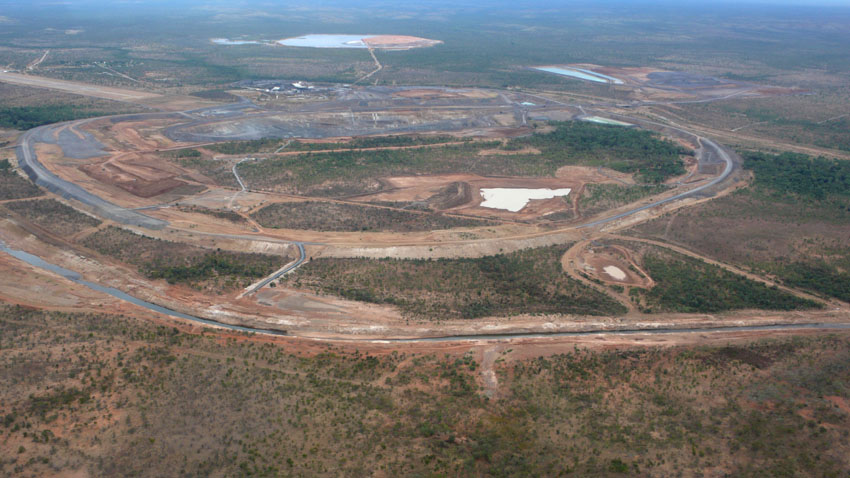
photo sourced Department of Environment, Commonwealth of Australia


The very premise of the Vegetation Management Act (VMA) is at fault to the point that it is not amendments that should be under consideration but a journey to replacement legislation that aims to achieve genuine consultation with the people most subject to the current Act’s apparent tyranny.

The Regional Vegetation Management Plans (RVMP’s) was the last time there was genuine consultation and two-way communication between government and rural landowners. This process was designed to initiate a cooperative and consultative approach on how to best to manage the balance of vegetation management and farming. As history has shown, common sense did not prevail and these were discarded in act of duplicity by the then Premier and government and the VMA introduced.

The approach taken in the VMA was also repeated in changes across the board to how government interacted with agricultural producers.  The core of the VMA champions coercion and discards cooperation. It saw the change of agency staff working with farmers in an atmosphere of goodwill and mutual respect to that of policing, prosecution and distrust. Previous important practical and common-sense “in the field conservation measures” were abandoned to remote, austere and antagonistic direction based on a political imperative and bending to the whims of the green movement. 

Such methodology creates distrust, division and resentment. It creates minimal adherence to an alien constraint to the realities that agricultural producers live, work and know. Loss of hope prevails to a level where farming families see no future for the young adults to come back to the farm and continue with agriculture as a career path. The urban politician who make these types of laws and the public servant who administers the law appear oblivious to how they, through these legislative instruments, indifference and ignorance, cripple the farming community and all those other levels of the community reliant on farmers being able to continue effective and profitable farming.

Some of us have been in the debate about vegetation management for over three decades now.  Even though we work, live in and have a long intimate relationship with the land, there is a sense of being treated as only a minor stakeholder whose views are consistently overridden by more powerful interests. It has been a degrading and humiliating experience being used as a political yo-yo during the many changes over the years to the VMA and legislation of its ilk.

One is left more than just a little cynical on why should we continue to play the game of perpetual submission writing, detailing a view on each provision being amended. We, the real custodians of the land, are left with the feeling of being ignored and treated with contempt.

There are those like myself who absorbed the original ethos of the Landcare movement when it first emerged. We, who are interested in practical, hands-on conservation, who know there is a beneficial tree/ grass relationship aiding both environmental and agriculture production criteria, who understand each bio-region is very different and cannot be administered by State-wide blanket legislation, we who do NOT want to knock down every tree but know that vegetation management can be as beneficial to farming as it is to the environment. Simply put, tree clearing itself is not bad, rather it’s a matter of where and how development is conducted.  There are those of us who live assuredly in a role of both the steward for our patch of land and as a provider of food for our society.

We could be prevailed upon to work together to a better legislative future, but until there is genuine demonstrated pathway of goodwill, respect, empathy, understanding and certainty of agreed negotiations be fully honoured, why should we bother? There needs to be a reversal of the current near certainty that we will be completely ignored - Ignored in favour of green groups who have no interest, or knowledge, in the successful integration of farming development and the environment.

This current Bill should be voted down for it ambiguous provisions, the possibility of increasing oppressive outcome, the continued enlarging upon flawed negative counterproductive laws and a total disregard for the opinions of the real
stewards of the land.    

Friday, 20 November 2015

Mining open slather on underground water continues

by George Houen, Landholder Services Pty Ltd
Image sourced [here]       


Miners will get to keep the Newman government’s gift of open slather on groundwater, plus the waiving of both the water licence requirement and the obligation to justify the volume of water they extract - and they will be able to use or dispose of the water any way they wish including by evaporation, which for obvious environmental reasons was banned in coal seam gas fields years ago.

At least miners who dewater will, for the first time, be subject to Chapter 3 of the Water Act which imposes a make good obligation and requires underground water impact reports. Successive governments have assured bore owners that if there is bore damage from dewatering the Chapter 3 make good scheme will protect them – that is false and when the scheme is called upon for a contested make good scheme the affected owners will find it is tragically flawed.


Natural Resources and Mines Minister Anthony Lynham announced on 10th November which parts of the previous governments water amendments he intends to repeal or amend. But open slather for miners stays – and after consultation with the Environment Minister and with stakeholders as to how it will operate it will be proclaimed into force, including for existing mines, on a date to be agreed.

Provided a mining lease and an environmental authority have been granted, unlimited dewatering is OK, even in a worst-case situation where dewatering is virtually certain to damage or destroy water bores as well as groundwater dependent flora or fauna.

Under present laws, groundwater impacts are a major factor in any environmental impact assessment for mining - often giving rise to objections supported by high-level expert evidence in the Land Court’s objections hearings. The Court directs any resulting recommendations on groundwater to the Environment Minister for consideration in deciding the environmental authority application.

But the Court under present laws doesn’t have jurisdiction to make recommendations about the licence for dewatering which - until proclamation of the change - is under the separate jurisdiction of Natural Resources and Mines. This segregation is artificial and should have been removed. However, under the Water Act an interested person who disputes grant of a water licence can request internal review of the decision and can also appeal to the Land Court about it.

Allowing dewatering without a water licence doesn’t alter the Environmental Protection Act assessment process for the proposed mine, nor does it alter the Land Court’s role as the independent assessor which makes recommendations to the Minister. Both of those phases are designed to assess and test the evidence on overall environmental impact (including impacts on groundwater and water users) and applications for environmental authority.

In spite of the miners gaining open slather dewatering, the current process of overall environmental assessment including the impacts on groundwater resources and on users of water bores, with a right for the public to object and be heard in the Land Court, will continue.

This tussle over the Newman government’s amendments gave Minister Lynham a golden opportunity to remove artificial demarcation and integrate the approval of dewatering with the well-established environmental assessment system – he let it slip. Now I expect that, true to form, mining company lawyers will use the advent of open slather dewatering and abolition of the requirement for water licenses to argue that objections about groundwater be no longer permitted.

RELATED PREVIOUS PUBLISHED ARTICLES

The Newman Government’s Water Act amendments: Part 1 - Deregulation of the Dewatering of Mines 

The Newman Government’s Water Act amendments: Part 2 - Uncoordinated Approval System 

The Newman Government’s Water Act amendments: Part 3, Make Good 

The Newman Government’s Water Act amendments: Part 4 - Stream diversions

Dewatering Mt Gibson Iron Ore mine, photo sourced [here]                                                                                                                       

Thursday, 28 May 2015

PRA: Landowner denied rights must not be repeated


Photo sourced - The Chronicle
Premier Palaszczuk’s election campaign launch speech promise[1] to reinstate the repealed Vegetation Management Act (VMA) could almost be forgiven as being ill informed but now after 100 days in office for the Premier to outline it as a priority task to be achieved is highly alarming. In a letter to the Minister for Natural Resources & Mines Anthony Lynham, the Premier gave the direction to,[2] "Re-instate the vegetation protection laws repealed by the previous government to reduce the clearing of native vegetation”.  


Property Rights Australia is most concerned that senior members of the Palaszczuk government, including the Premier herself, have failed to grasp that the VMA was not repealed but amended[3] and amended modestly at that. Unlike the over the top approach taken in resource legislation, the Newman government amendments to the VMA were restrained, responsible and restored basic tenets of our legal system; civil rights that the wider community take for granted but had been denied to landowners. There have been many column inches devoted to the horror of the reversal of the onus of proof under the so-called “bikie laws”[4] including by the Labor party.[5] Qld was the first jurisdiction in Australia to reverse the onus of proof[6] and it happened under the Beattie Labor government’s Vegetation Management Act.[7]  We expect this type of attack on the Justice system not to be repeated 

The current government should be wary of pressure by various “green groups” which are continually being proved to be lacking in substance or in touch with real situations impacting real people in Queensland at this time.  Activists with an environmental agenda have lost no time in getting in the governments ear with the incorrect notion that the VMA had been repealed and landclearing is again out of control.  Published articles by a group of academics calling themselves “concerned scientists”[8] show little scientific integrity, deceptive selection of the facts and exaggerated conclusions.  WWF in its latest Living Forests report[9] devote a whole chapter with the use of “projections” to forecast a resulting deforestation from changes to environment legislation.  WWF believes that your brigalow suckers are “critically important” and without a word about compensation of production loss to the landowner states the desire to see brigalow regrowth to mature for 30 years to provide wildlife habitat. Typically Dr Tim Seelig, Queensland Campaign Manager for the Wilderness Society makes gross exaggerations,[10]

”The LNP substantially weakened land clearing controls in Queensland, resulting in a return to large scale clearing and an impending tree clearing crisis on a massive scale.”

In responding to questions in the Queensland parliament on May 13 from the Member for Warrego Ann Leahy, Dr Lynham said that,[11] “we have no plans to change those specific portions such as the self-assessment criteria.”  PRA believes to revert back to the old arrangements of a deadly slow time frame to obtain permits to harvest the self-regenerating acacia mulga crucial for drought fodder would defy logic.[12]  

With 80% of Queensland in drought it is most likely graziers concerned for the welfare of their livestock; feeding mulga will most likely be the greatest contributor to any increase in the area of land clearing.[13] Mulga is well known for its ability to re-establish itself.
Gidgee trees are notorious for encroaching
Photo sourced ABC Rural - New tree clearing laws in Queensland

Going by where the most fervour of the radical environmentalist is directed, provision of clearing for high-value agriculture[14] is the area most at risk for attention by the Palaszczuk government. Tim Seelig in his dedicated vehemence says,[15]

“The LNP approved at least five massive land clearing projects in northern Queensland, including at Olive Vale. Those five projects total 113,000 hectares. Other approvals include almost 60,000 hectares at Strathmore Station in the Gulf Country.” 

To provide some perspective Qld is a large state covering 1,727,000 square kilometres with over 200 national parks covering 6.5 million hectares.[16]  Most agricultural production essential to feed our population by necessity occurs off land that is thinned of its vegetation or a large percentage cleared.  Land has been set aside for different purposes and its time environmentalists reserve full conservation management to National Parks only and don’t transfer these expectations to agricultural production systems. The introduction of the VMA caught large tracts of north Qld under developed with landowners uncompensated for declining production.  

Recently the federal member of Leichhardt, Warren Entsch, gave some perspective of the clearing being undertaken at Olive Vale calling activists claims, “emotional clap-trap.”[17]  Mr Entsch owned Olive Vale up to the early 2000’s said that,

“He believed the area to be cleared – which represents less than 10 per cent of the station – was mostly open country with few trees. 

“There’s not a lot of agricultural opportunities in Cape York, but those areas that have been identified through the scientific process are areas where we should be going, giving an economic opportunity for people living in the area,’’
 
It is rather inconvenient for the environmental activists the recent release of the international scientific paper, ‘Recent reversal in loss of global terrestrial biomass’[18]  that showed vegetation in Australia has actually increased with the encroachment of trees into grassland a key factor. Dr Bill Burrows in a 2013 paper, “Bushland at risk of continued tree and shrub thickening in Queensland” wrote,[19][20]

“Many other land types were, and remain, subject to increased “thickening” of the over-storey or sub-canopy tree and shrub cover, or both, over time. Likewise trees are actively encroaching on some native grasslands . Examples of this changing structure and composition of the vegetation include mulga thickening in country east of the Warrego River, gidgee encroachment onto Mitchell grasslands , increased eucalypt cover in the Desert Uplands and Central Highlands/Burdekin Catchment  and tea tree invasion of grasslands in Cape York. Even National Parks and reserves abutting grazing land are subject to ongoing tree thickening e.g. the disappearing grassy balds of the Bunya Mountains, acacias invading grasslands on Moorinya N.P. and rainforest invading wet sclerophyll forest in the wet tropics.”

 
Rural Queensland does not need a repeat of the full extent of the poor archaic Beattie Labor government legislation that was enforced in a vindictive, punitive manner.[21] [22]

 As stated by Premier Palaszczuk in her directive to Dr Lynham,[23] “it is important to achive the best outcomes for Queenslanders” and “to make all decisions and actions in the public interest”.  To reverse the current strict guidelines already in place for tree clearing in Queensland will not deliver the best outcomes for Queenslanders and as seen in the past, replacing cooperation with coercion and heavy-handed administration creates more problems and is not effective or productive.
Another downgrade in crop yield is possible
Photo sourced ABC Rural - the hot issues as Queensland

 
PRA has been aware and is highly concerned that in recent months of DNR&M staff appear to have been given directives to find someone to hold up as an errant example to what would appear to be an excuse to review the current tree clearing legislation to appease election promises made to green groups.  Legal firm Ferrier & Co principle Tom Marland recently made the statement based on evidence from a number of clients who have been subjected to formal inspections last month that,[24]

“it was clear from the imagery and mapping that DNRM were not inspecting irregularities but were inspecting properties to support prosecutions.

“DNRM have sufficient information to determine whether charges should be laid. The purpose to inspect and speak with landholders is to falsely obtain a confession or some form of omission of guilt.”
 
PRA strongly advises landowners that if departmental staff approaches them on a land clearing matter to immediately seek legal advice. In these circumstances usual country hospitality and openness should not apply.


Previous published related article


Sunday, 25 January 2015

The Newman Government’s Water Act amendments: Part 4 - Stream diversions


by George Houen
McArthur River Diversion, July 2010 © MPI / 2010
McArthur River Mine, photo sourced [here] 

Stream Diversions 

Setting the miners free to dewater as much as they like and without any prior impact assessment is  not consistent with the Bill’s treatment of miners’ authority to divert surface water in streams, which currently also requires a water licence. Under the amended section 98 of the Water Act they may only divert a stream if the particular diversion and its impacts were assessed as part of the grant of an environmental authority and a condition of the authority allows it.  

Comment 

It should be permissible that objections against an environmental authority or its conditions (including any Coordinator General’s conditions) may include objections against a proposed stream diversion.
 

First Refusal for Affected Landholders 

Under the Bill’s clause 334Z of the MR Act, the miner may use the associated water for any purpose anywhere. This could result, for example, in groundwater which the bore owner is entitled to and is relying upon, being taken and used by the miner off lease for a non-mining purpose, or sold to someone else for a non-mining purpose.  

Comment 

Where the dewatering produces associated water in excess of a miner’s requirements for the mining purposes, the miner should be required to treat the surplus by reverse osmosis, then give all potentially affected landholders first right of refusal to take the treated water for their own use, at no cost.
 

Agreement 

A template make good agreement (which is readily adapted for either mining or CSG) is available from landholder Services. It was first adopted at the Callide Mine some 6 years ago and has been subjected to extensive review since. Provisions for baseline testing, monitoring and setting of trigger levels in the original agreement have operated satisfactorily. 

 George Houen
Landholder Services Pty Ltd
13 Cottesloe Street
Toowoomba
Qld 4350
Phone 07 4632 1024


Previous published related posts