
By John Mikkelsen
AN ALARMING report into possible health effects of
coal seam gas developments on a Surat Basin community has been presented to the
Queensland Government by a Brisbane GP.
The study by Dr Geralyn McCarron, found a higher than
normal level of possible neurotoxicity, including numbness, spasms and
twitching, as well as muscle soreness, nose bleeds, rashes and vomiting,
particularly among children living in the Tara residential estates close to gas
wells

Photo & graphs below sourced from Dr McCarron's report
This settlement on the Darling Downs is part of an
extensive area being developed by coal seam gas companies to supply the three
multi-billion dollar export liquefied natural gas plants under construction on
Curtis Island near Gladstone.
 Dr McCarron, originally from Ireland, told The
Telegraph she had decided to undertake the study “completely independently”
after learning of health problems reported by families living close to the gas
wells and a subsequent Queensland Government report claiming there were no
significant health problems linked to CSG.
Dr McCarron, originally from Ireland, told The
Telegraph she had decided to undertake the study “completely independently”
after learning of health problems reported by families living close to the gas
wells and a subsequent Queensland Government report claiming there were no
significant health problems linked to CSG.
She said the government study and findings were “so inadequate and flawed that it has done little to
alleviate concerns”
A copy of her report and recommendations including
calls for fully funded urgent and comprehensive health studies in gas field
areas, was presented to Health Minister Lawrence Springborg’s office on May 9.

Titled, “Symptomatology of a gas field - An independent health survey in the Tara rural residential estates and environs,” the study involved collecting information on 113 people
from 38 households - 17 were children 5 years of age or less, 31 were aged
between 6 and 18, and 65 were adults aged over 19.
Dr McCarron said 58% reported
their health was definitely adversely affected by CSG, with 19%
uncertain.
“The pattern reported was
outside the scope of what would be expected for a small rural community. In all age groups there were reported increases
in cough, chest tightness, rashes,
difficulty sleeping, joint pains, muscle pains and spasms, nausea and vomiting.
 “Approximately one third of the people over 6 were reported to have spontaneous nose bleeds, and almost three quarters were reported to
have skin irritation. Over half of children were reported to have eye
irritation.
“Approximately one third of the people over 6 were reported to have spontaneous nose bleeds, and almost three quarters were reported to
have skin irritation. Over half of children were reported to have eye
irritation.
“A range of symptoms were reported which can sometimes be related to
neurotoxicity (damage to the nervous system), including severe fatigue,
weakness, headaches, numbness and paraesthesia (abnormal sensations such as
pins and needles, burning or tingling). Approximately a third of the all the 48
children to age 18 were reported to experience paraesthesia. Almost all the 31
children aged 6-18 were reported to suffer from headaches and for over half of
these the headaches were severe.
 “Of people aged 6 years and over, severe fatigue and difficulty
concentrating was reported for over half. Parents of a number of young children reported
twitching or unusual movements, and clumsiness or unsteadiness.
“Of people aged 6 years and over, severe fatigue and difficulty
concentrating was reported for over half. Parents of a number of young children reported
twitching or unusual movements, and clumsiness or unsteadiness.
“This unfunded study is limited in terms of what can be concluded and
does not claim to be without methodological problems. However what it does do
is highlight the basis for serious concerns of the residents and the need for
the Queensland government to fund a comprehensive epidemiological investigation
of the problem,” the report states.
Dr McCarron claims no baseline air, water monitoring or health studies
were done prior to the Queensland Government permitting the widespread
development of the CSG industry close to family homes.
“No ongoing health study or surveillance and no ongoing testing to
monitor chronic exposure levels is in place. This is clearly unacceptable,” she
said.
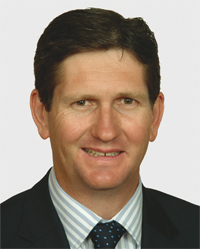
But Mr Springborg told The Telegraph that a comprehensive inter-departmental report, tabled in Parliament, provided “the best available data and robust advice on the effects of Coal Seam Gas on the health of Tara residents”.
Photo sourced from Qld Parliament member list
He said the report, based on data from local practitioners, occupational health experts, published papers and departmental advice, found no clear link between CSG activities and residents’ health complaints.
“The
low number of individuals reporting symptoms was among the reasons for the
finding. The estimated population for the exposure area was 1,257 people.
Forty-six residents, or 3.7 per cent, reported symptoms,” Mr Springborg said.
He
claimed the report by Dr McCarron, “on
behalf of anti-CSG groups”, contained nothing new, but a number of assertions
which lacked substance and did not detract from the tabled findings.
The
State Government report made six recommendations:
- A coordinated response by Government agencies, including a community reference group to help identify health, community and social concerns
- The introduction of community support initiatives in affected areas
- Future health clinics in the Tara region, with community input about their nature, location, frequency and timing - including strategies to address aspects of mental health
- Regular, timely and accurate feedback to communities in relation to health, community and social concerns, including reports on air monitoring
- The continuation of air monitoring by the Department of Environment and Heritage Protection to identify emissions and the extent of community exposure
- The possibility of measures to monitor and mitigate exposure to low frequency noise.

