Showing posts with label Surat Basin. Show all posts

Thursday, 14 August 2014

Powerlink may listen; but do they hear

By Kerry Ladbrook
First published as a letter to the editor, Queensland country Life August 14 2014
 
Hear No Evil Foundation Sticker
Image sourced [here]


Reading the CEO of Powerlink Qld Merryn York’s Letter(QCL 31st July 2014), I must agree Powerlink do listen but do they hear?
As a directly impacted landholder by PQ development and a Board Member for Property Rights Australia, I hear many things both current and in the past on the antics of PQ and the outcomes.
It is fortunate for Powerlink the Woodduck Landholder Group’s independent inquiry by McCullough- Robertson  Lawyers(QCL 24th July 2014), did not expand into the entire affected North West Surat Basin.  The inquiry would have been more reflective of Powerlink Qld’s pressured and often dishonest consultation practises commonly used in their process.

Jump back in time and there are stories eerily similar to Woodduck where landholders  with powerlines already constructed  are continuing to be ignored by PQ for appropriate compensation payment.


The Acquisition of Land Act 1967 encourages this type of arrogant behaviour when resuming land and easements.   Resumption for commercial activity must be negotiated on a commercial basis with negotiated landholder access(S15 Resumption),  not as compulsory acquisition . Landholders are reluctant sellers and should be compensated as such.  Annual payments should be mandatory, not associated with the dangling of a carrot as is currently occurring with Santos and Origin.

PRA hear continual trouble with the ALA 1967 beyond Powerlink’s activity in the NW Surat basin; Sunshine Coast with Powerlink & SEQ Water/The Ipswich Motorway with Main Roads/ the Gallilee Basin with Rail corridors and  which will also have future development from Powerlink. 

Merryn York, consultation requires much more than just listening and no amount of external reviews will address this unless PQ can be trusted and made responsible for what they say and agree to.  People should not be going through such a difficult process to find a fair outcome.

Ideally Government Owned Corporation Shareholding Ministers Seeney, McArdle & Nichol need to implement changes for which ministerial designation must occur under the Sustainable Planning Act that is more rigorous  than that just the timely supply of infrastructure, in addition to improving the process of deriving a Conduct & Compensation Agreement (CCA) for the project.

As an urgent first step, where the project is for private profit, the State Government needs to at least implement a change to the ALA to ensure that landholders can negotiate both access conditions and compensation(CCA)  in a similar way to the P&G Act, and as a requirement before the Notice of Intention to Resume (NIR) is issued.
Previously published related articles


Friday, 8 November 2013

It's time to recognise time


by Kerry Ladbrook
 
Photo: Wandoan South sub station
How do Powerlink Qld and many of the Coal Seam Gas Companies recognise landholder’s time impacted by their projects in order for these corporations to meet deadlines?  They don’t, but under legislation landholders must engage with them.

How do Government Corporations such as Powerlink Qld recognise their employees meeting deadlines? By paying Staff Performance Pay Bonuses and allowing them to share in a Gainsharing Pool of money if their projects come in under budget. 

In the North West Surat Basin, there has been more “give” than “take” by landholders impacted by a web of high voltage transmission powerlines for the sole benefit of the coal seam gas companies.  Powerlink Qld is undertaking these contracts ignoring landholder input into the proposed study corridors in planning for this infrastructure. Due to inappropriate locations, time wasted by Powerlink employees has been enormous and costly to the Qld Government, CSG and Rural industries.

While Powerlink employees continue to be paid for their mistakes, landholders have to endure even greater impacts upon their time. Farmers are running a business and should not be placed in the position of de facto charities for the benefit of multinational companies.

Time impacts on our business equates to two days per week since first engagement with Powerlink 16 months ago with agreement yet to be reached.  How many family businesses can afford to carry this type of impact without recompense?

The Community Designation Process that Powerlink Qld is allowed to follow is highly pressurised and with less rights than CSG legislation as it comes under the Acquisition of Land Act 1967.

It’s more than time that landholder’s time is recognised. The Queensland government needs to look to positive legislative change for landholders. Recognition of landholder time as separate to other compensation needs to occur.

Allowing for full cost recovery will result in a greater willingness to address issues from the outset.  

Sunday, 26 May 2013

Study links health symptoms to CSG


By John Mikkelsen 
 
First published at the Queensland Telegraph.
AN ALARMING report into possible health effects of coal seam gas developments on a Surat Basin community has been presented to the Queensland Government by a Brisbane GP. 

The study by Dr Geralyn McCarron, found a higher than normal level of possible neurotoxicity, including numbness, spasms and twitching, as well as muscle soreness, nose bleeds, rashes and vomiting, particularly among children living in the Tara residential estates close to gas wells 
Photo & graphs below sourced from Dr McCarron's report
 

This settlement on the Darling Downs is part of an extensive area being developed by coal seam gas companies to supply the three multi-billion dollar export liquefied natural gas plants under construction on Curtis Island near Gladstone. 

 Dr McCarron, originally from Ireland, told The Telegraph she had decided to undertake the study “completely independently” after learning of health problems reported by families living close to the gas wells and a subsequent Queensland Government report claiming there were no significant health problems linked to CSG. 

She said the government study and findings were “so inadequate and flawed that it has done little to alleviate concerns” 

A copy of her report and recommendations including calls for fully funded urgent and comprehensive health studies in gas field areas, was presented to Health Minister Lawrence Springborg’s office on May 9.


 Titled, “Symptomatology of a gas field - An independent health survey in the Tara rural residential estates and environs,” the study involved collecting information on 113 people from 38 households - 17 were children 5 years of age or less, 31 were aged between 6 and 18, and 65 were adults aged over 19.
Dr McCarron said 58%  reported  their health was definitely adversely affected by CSG, with 19% uncertain.
“The pattern reported was outside the scope of what would be expected for a small rural community. In all age groups there were reported increases in cough, chest  tightness, rashes, difficulty sleeping, joint pains, muscle pains and spasms, nausea and vomiting.  
“Approximately one third of the people over 6 were reported to have spontaneous nose bleeds, and almost three quarters were reported to have skin irritation. Over half of children were reported to have eye irritation.  
“A range of symptoms were reported which can sometimes be related to neurotoxicity (damage to the nervous system), including severe fatigue, weakness, headaches, numbness and paraesthesia (abnormal sensations such as pins and needles, burning or tingling). Approximately a third of the all the 48 children to age 18 were reported to experience paraesthesia. Almost all the 31 children aged 6-18 were reported to suffer from headaches and for over half of these the headaches were severe.  
“Of people aged 6 years and over, severe fatigue and difficulty concentrating was reported for over half. Parents of a number of young children reported twitching or unusual movements, and clumsiness or unsteadiness.  
“This unfunded study is limited in terms of what can be concluded and does not claim to be without methodological problems. However what it does do is highlight the basis for serious concerns of the residents and the need for the Queensland government to fund a comprehensive epidemiological investigation of the problem,” the report states. 
Dr McCarron claims no baseline air, water monitoring or health studies were done prior to the Queensland Government permitting the widespread development of the CSG industry close to family homes.  
“No ongoing health study or surveillance and no ongoing testing to monitor chronic exposure levels is in place. This is clearly unacceptable,” she said.  

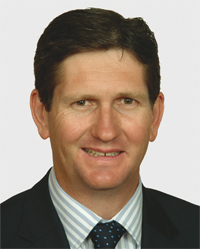
Springborg, Lawrence


But Mr Springborg told The Telegraph that a  comprehensive inter-departmental report, tabled in Parliament, provided “the best available data and robust advice on the effects of Coal Seam Gas on the health of Tara residents”.


Photo sourced from Qld Parliament member list


He said the report, based on data from local practitioners, occupational health experts, published papers and departmental advice, found no clear link between CSG activities and residents’ health complaints.
“The low number of individuals reporting symptoms was among the reasons for the finding. The estimated population for the exposure area was 1,257 people. Forty-six residents, or 3.7 per cent, reported symptoms,” Mr Springborg said.
He claimed the report by Dr  McCarron, “on behalf of anti-CSG groups”, contained nothing new, but a number of assertions which lacked substance and did not detract from the tabled findings.
The State Government report made six recommendations:
  •  A coordinated response by Government agencies, including a community reference group to help identify health, community and social concerns
  •  The introduction of community support initiatives in affected areas
  • 
Future health clinics in the Tara region, with community input about their nature, location, frequency and timing - including strategies to address aspects of mental health
  •  Regular, timely and accurate feedback to communities in relation to health, community and social concerns, including reports on air monitoring
  • 
The continuation of air monitoring by the Department of Environment and Heritage Protection to identify emissions and the extent of community exposure
  • The possibility of measures to monitor and mitigate exposure to low frequency noise.